
Considered one of NASA’s longest-tenured spacecraft is kind of actually caught previously.
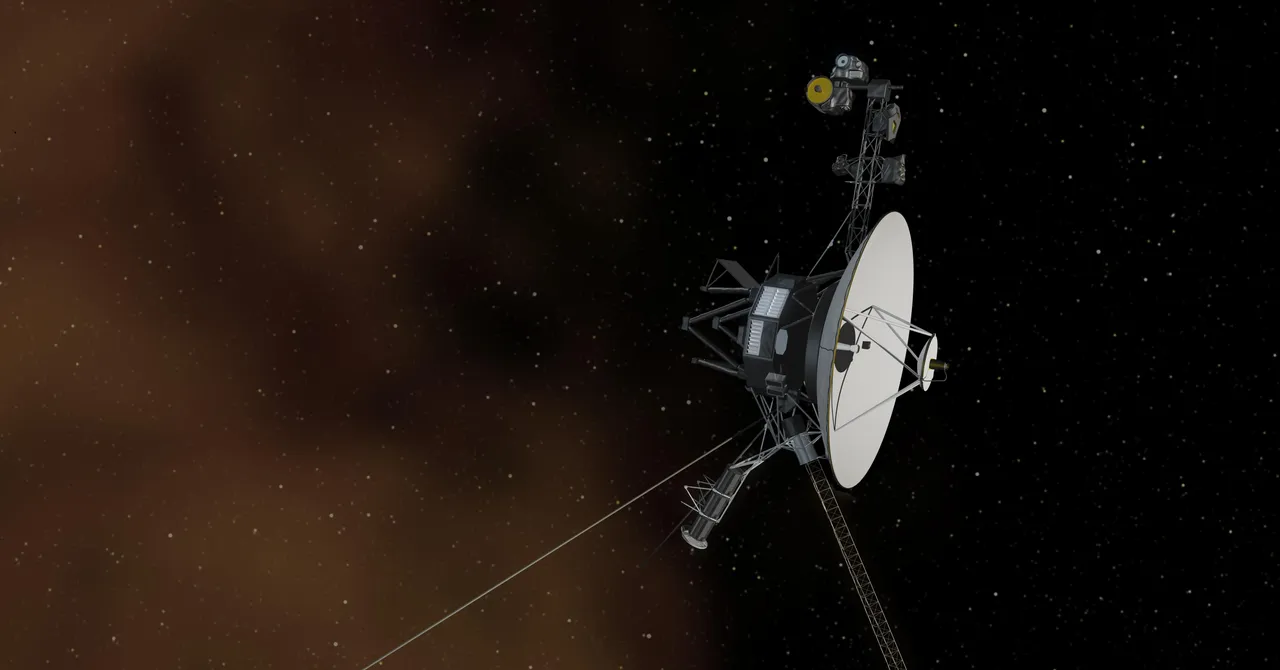
Voyager 1, launched in September 1977 towards the outer planets of our photo voltaic system, is poised to realize a historic milestone on Wednesday: Will probably be the primary human-made object to succeed in one light-day from Earth. The spacecraft can be so far away, that by the point its mild reaches Earth, it’ll come from the spacecraft because it existed in the future previously. The achievement is one researchers hadn’t planned on, and but, as Voyager 1 wades deeper into uncharted stretches of the galaxy, it continues sending again invaluable scientific info.
“It is only a great happenstance,” Kareem Badaruddin, Voyager mission supervisor at NASA’s Jet Propulsion Laboratory, says of the milestone. “Simply as the celebrities have been aligned for the tour of the planets, they’re additionally aligned for this actually magical, particular factor that is occurring for humankind.”
For Fran Bagenal, a planetary scientist on the College of Colorado, Boulder, who started working with Voyager 1 as a graduate scholar throughout its earliest years, the event is a momentous technological feat. “What’s thrilling is the truth that now we have a spacecraft that was constructed within the mid ’70s that’s nonetheless working,” she says. “Storing information on an eight-track tape that’s engaged on a spacecraft after 50 years—I imply, it’s superb.”
Whilst Voyager 1 approaches its 50-year anniversary subsequent September, and its finish of mission maybe not lengthy after that, the spacecraft remains to be checking objects off its laundry listing of scientific achievements. The spacecraft—alongside its twin, Voyager 2—was initially supposed to make the most of a uncommon planetary alignment to observe the outer planets.
However Voyager 1 saved touring past the photo voltaic system and is now exploring the interstellar medium that fills the area between star techniques. Voyager 1’s remoteness provides researchers a uncommon alternative to review how the consequences of the solar ripple even into the interstellar medium—and at what level these results wane, says Jamie Rankin, deputy challenge scientist for the Voyager Mission at Princeton College.
Simply as each Voyager spacecraft are shifting via area, so is our personal photo voltaic system—solely about 35,000 miles per hour slower, Badaruddin says. That implies that because the pair proceed their journeys, they’re sending again details about the area that our personal solar and planet will go via in about three years’ time.