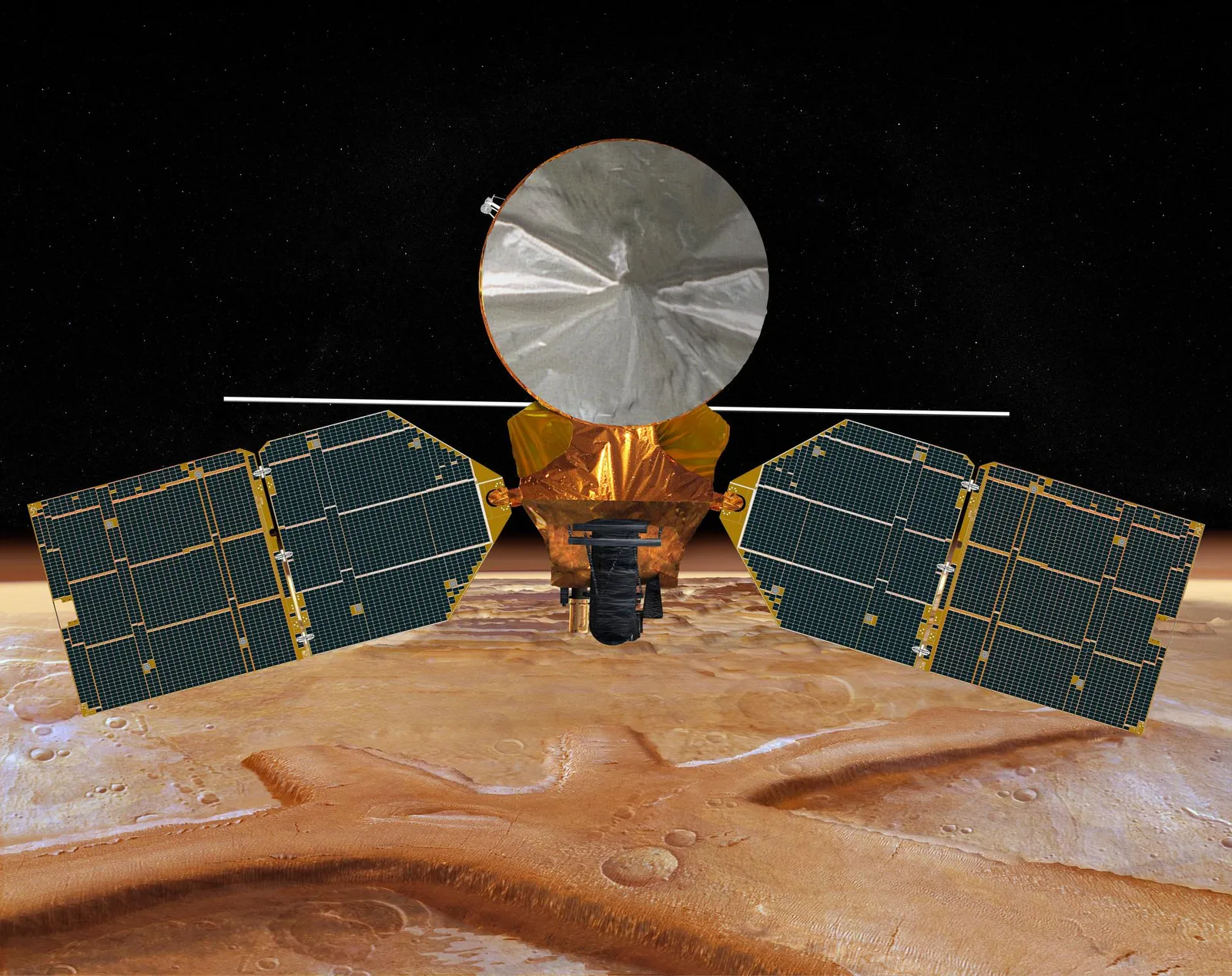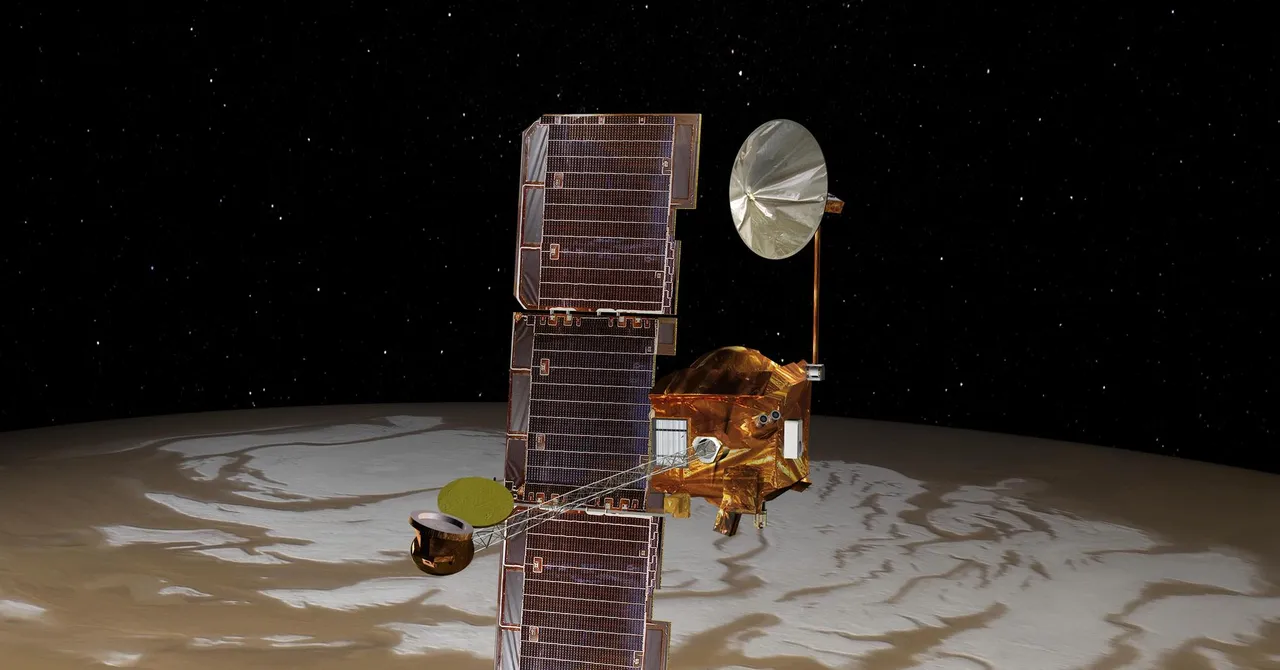

NASA’s Mars Odyssey spacecraft has been working for thus lengthy, it might probably lease a automobile with none charges. The spacecraft arrived at the Red Planet on October 24, 2001. It, together with its 20-year-old sibling, the Mars Reconnaissance Orbiter (MRO), have operated longer than anybody watching their launches might have dreamed attainable.
Having such a long record of observations from above the Martian floor has rewritten the story of water on the planet, previous and current alike. Holding the wizened orbiters going for thus lengthy has been attainable solely due to nice engineering and fixed downside fixing—and a bit luck. However scientists ponder whether, regardless of their storied legacies, Odyssey and MRO would be the final of their variety, a minimum of for the Purple Planet.
“Each Odyssey and MRO are a few of the most efficient spacecraft which have ever existed,” says Briony Horgan, a planetary scientist at Purdue College who isn’t affiliated with both mission, calling them “essential” to NASA’s total Mars analysis program. Odyssey’s observations of the planet’s ice, for instance, and MRO’s means to see floor options change over time have every given scientists unprecedented perception into Mars as a vibrant planet slightly than a lump of rock. Odyssey and MRO additionally join people to every NASA rover, which might’t talk with Earth straight. It’s a powerful legacy for a pair of orbiters that have been solely meant to final just some years.
House is a notoriously harsh surroundings that takes luck and resilience to outlive for many years. Notably difficult is the barrage of high-energy particles hitting equipment; a strong sufficient strike to a fragile sufficient equipment will be deadly. And whereas engineers can maintain fixed tabs on satellites orbiting Earth, bandwidth to Mars is extra restricted—science spacecraft would possibly solely test in a few times per week, says Rob Lillis, a planetary and house physicist on the College of California, Berkeley, who has labored on a spread of newer Mars orbiters.
“A Mars craft has to have the ability to handle by itself,” he says.