
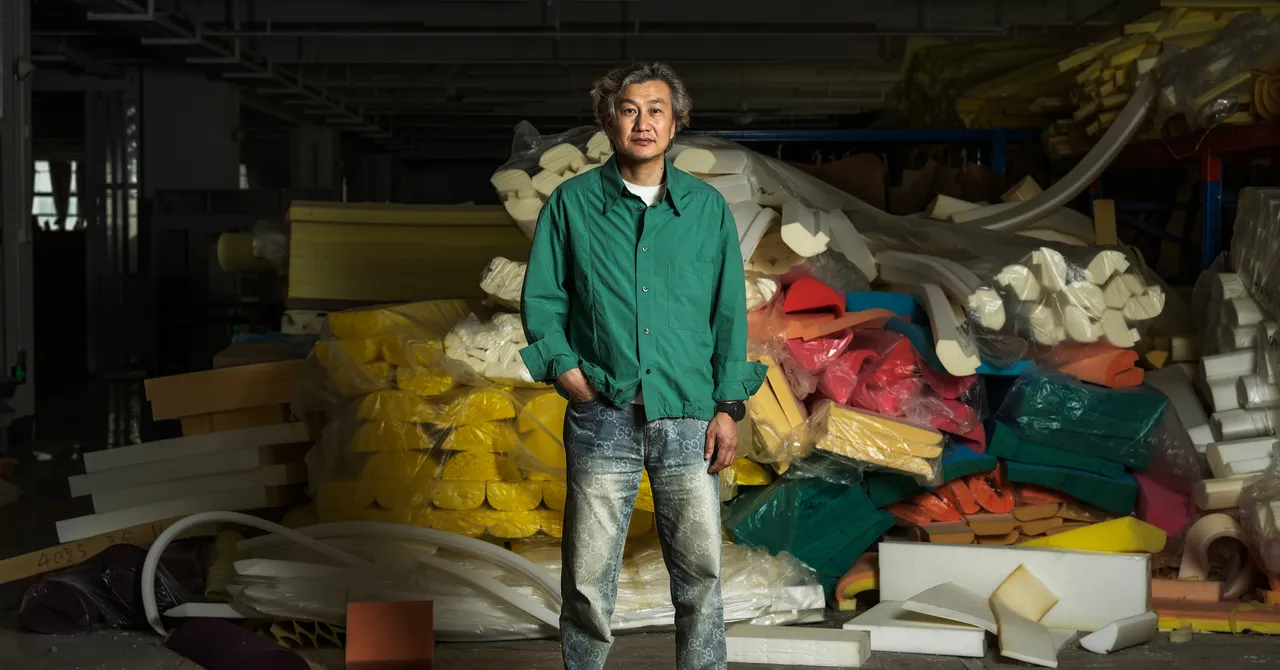

This path isn’t low cost. Buying unique items requires important funding, typically eight to 10 instances the worth of the dupes his manufacturing facility produces. As soon as the mannequin is completely studied, effectivity improves. Right now, Wang says, his group can full the copy of a brand new design inside 45 days. This system has allowed his manufacturing facility to achieve annual gross sales of 20 million yuan (about $3 million). In contrast to Minotti, which makes virtually each piece of its customized furnishings in Meda, Italy, Chinese language factories can rely on a lot decrease prices for labor and manufacturing.
To outsiders, Wang’s work is ethically doubtful, however he’s unapologetic. “What we’re making an attempt to do is copy it first and surpass it later,” he says. “Many individuals look down on copying others, however we ignore these noises. First, we be taught their particulars and craftsmanship. Upon getting the monetary energy and imaginative and prescient, you’ll be significantly better geared up to do your individual factor.”
In his view, so long as a product doesn’t carry the unique model’s brand, it can’t be thought-about “counterfeit and substandard.” On a extra sensible stage, he has developed methods to cut back authorized danger. Primarily based on his understanding of rules, Wang says, a chunk is legally distinct if there are “seven factors of distinction,” even when that’s as minor as altering a board’s thickness from 3 centimeters to 2.9.
Wang’s rule of seven is a typical perception amongst Chinese language producers, however it’s extra folklore than legislation, says Morgan Pietz, managing accomplice on the Los Angeles workplace of Service provider & Gould, who has represented each side of furnishings IP lawsuits. “At the least beneath US legislation, there’s no rule that if you happen to make seven modifications, you’re good to go,” he says.
However it’s troublesome to legally declare that somebody has knocked off a furnishings design, attorneys say. Within the US, most plaintiffs within the furnishings trade must go down one in all two routes: Both they register patents for every of their merchandise, or they should reveal {that a} layperson would be capable of discern the product’s origin. Each are troublesome hurdles to clear. Design patents can price round $5,000, together with lawyer prices and a submitting payment for one product, they usually solely final 15 years; to make a “commerce costume” declare, a furnishings firm wants to point out that its customers acknowledge the design as being from a selected supply. Typically, furnishings designs don’t rise to this stage of scrutiny. And regardless of which route one chooses, bringing the declare to courtroom and imposing it might price thousands and thousands of {dollars}.